Change Starts Now!
Add your name if you will stand with Currie Dixon and the Yukon Party!
In early July, Yukoners faced a 10 percent increase in their electricity bills, which will be the first of several increases that will total a 34 percent increase by 2027. For many, this sharp rise has been shocking and will cause hardship as it comes during a period where the cost of living is already a struggle. For those wondering why this is happening, these increases are the direct result of the current government’s failed energy strategy and poor political decision-making. The decisions made over the past nine years have had consequences and costs, and Yukoners are now starting to feel the effects.
The government’s failures fall on both the supply and demand sides of the energy system. On the supply side, our grid is stretched thin, and we are on the cusp of not having enough power to meet our needs. In 2019, the government cancelled a planned 20-megawatt power plant for ideological reasons and instead chose to rely on renting diesel generators. Despite initially promising that we would only need a few rentals, and only for a short time, last year Yukon Energy rented 22 diesel generators, and they plan to continue relying on them well into the 2030s. This decision has proven costly for the utility and electricity ratepayers, as tens of millions have been spent on rental costs to date. Meanwhile, promised renewable projects languished and are either delayed, overbudget, or stalled completely. On top of this, Yukon Energy’s most recent strategy shows that our hydro facilities are aging and need $200 million in upgrades just to continue functioning.
In the face of these challenges on the supply side, the government has made things worse by actively encouraging growth in demand. Population growth and increased electricity use have driven demand up. But subsidies for electric vehicles (EVs), incentives to switch to electric heat, and free electricity to EV drivers have all contributed to growing demand even more. Yukon Energy already reports that they expect a 40 percent increase in demand by 2030, and that switching a home to electric heat uses three times more power, and an EV can increase it up to six times. All of this strains our grid and drives up costs, so it is not hard to see why it’s time for a change.
Rapid electrification may be a future goal, but it’s simply not realistic right now. We need to follow the lead of the federal government and stop EV subsidies, stop providing free charging for EV drivers and let the private sector invest in expanding charging infrastructure. Likewise, as Canada eases their EV mandates, Yukon should also reconsider its legislated mandates that require thousands of new EVs to be sold in the Yukon by 2030. We simply do not have the power on the grid to allow this rapid electrification.
On the supply side, the answer is simple. We need affordable and reliable generation capacity. The promise we made in 2021 to begin construction of a new thermal power plant is all the more critical today in 2025. A Yukon Party government would immediately begin construction of new thermal generation to supply at least 45 megawatts of dependable winter capacity. We will also invest in upgrades of our current hydro assets to ensure they continue to support our grid as they have for the past several decades. These investments will not be flashy, but they are very much needed to keep the lights and heat on in the darkest and coldest months of the Yukon winter.
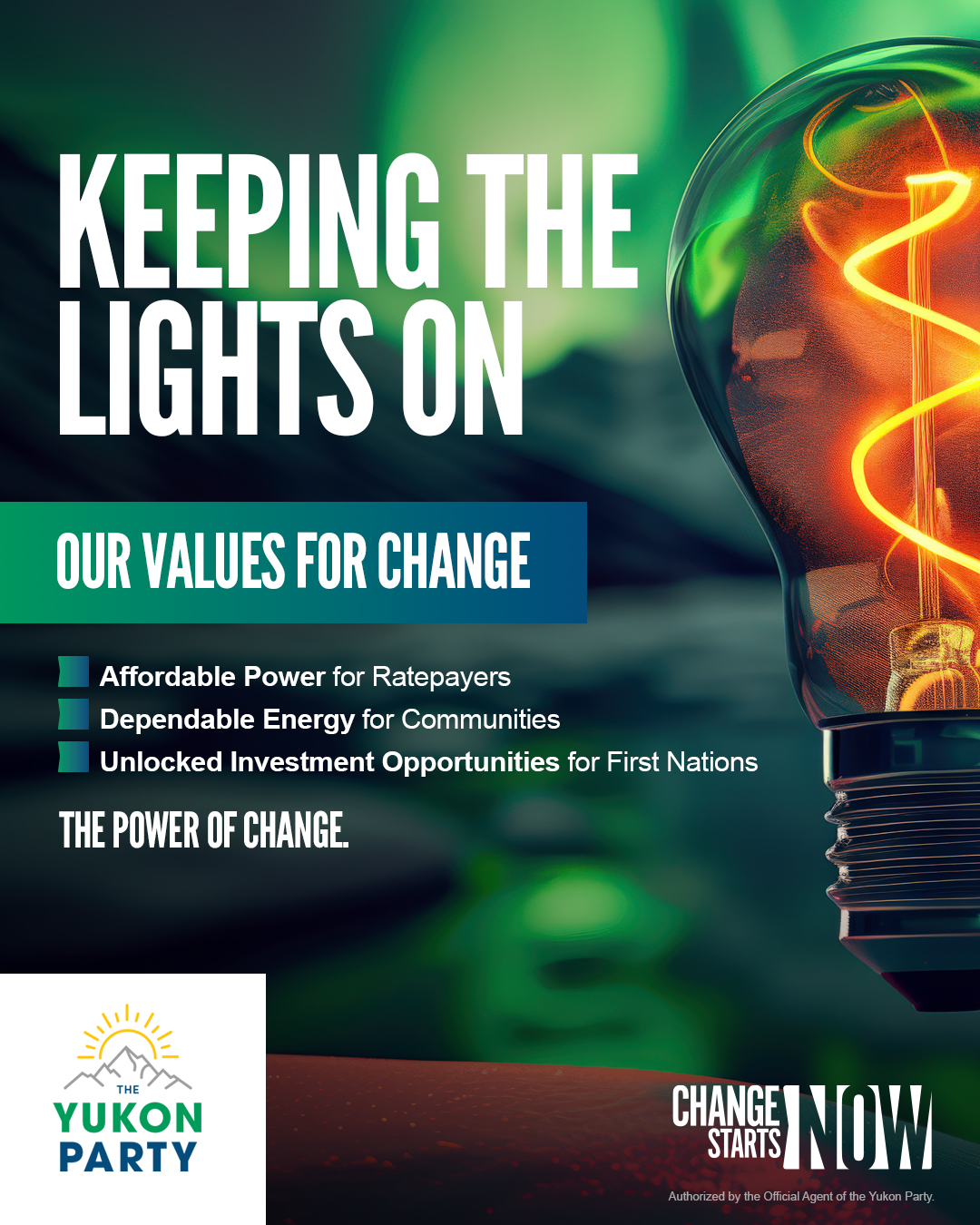
It will be upon this foundation that we also continue to add new renewable energy projects as part of the solution. To do this, we need to update the Independent Power Producer Policy (IPP) to ensure that these projects can meet the needs of our grid, including by ensuring they use cost-effective solutions to deliver power at the times of year when we need it. Further strengthening the IPP allows private investment to flow to renewable projects that can help address our supply needs. It also helps create the framework for renewable energy to become a healthy private sector industry that diversifies our economy and creates private sector jobs. Furthermore, we need to unlock investment opportunities for First Nations governments and businesses by creating a clear policy for allowing and encouraging genuine equity investment and partnerships. Investing in energy infrastructure should become a pathway for First Nations governments to deepen their participation in the Yukon economy and create revenue, jobs and economic opportunities for First Nations citizens.
Completing all this work will require political leadership and a focus on putting affordability for Yukon ratepayers at the centre of decision-making. This is exactly the change that the Yukon Party will offer in the next election.
Currie Dixon
Leader of the Yukon Party
Whitehorse, Yukon
Change Starts Now!
Add your name if you will stand with Currie Dixon and the Yukon Party!